
 English






- Welcome
- Use of robots today
Use of robots today
- Dr Jacques Vallotton
- Knee osteoarthritis

Dr. Vincent Villa – Lunch Meeting, February 2026
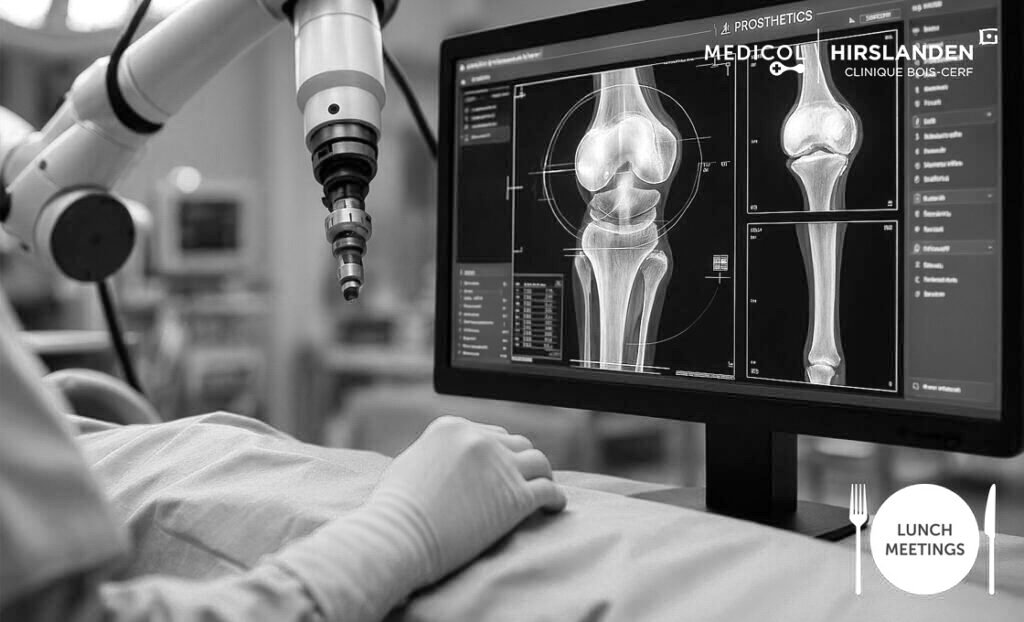
When robotic surgery is mentioned, one image often comes to mind: that of an autonomous robot performing the operation alone, while the surgeon supervises remotely. The reality is quite different. The surgical robot is a decision-making and execution aid, entirely controlled by the surgeon, who remains in control of every movement throughout the procedure. Far from simplifying the surgeon's work, robotic surgery actually demands more analysis, planning, and precision—before, during, and after the operation.
In practical terms, the robot functions as a positioner for cutting guides—the reference points that allow for bone cuts to be made with the greatest possible precision—or as an articulated arm that orients the surgical saw in three planes of space. The surgeon analyzes, plans, and executes. The robot provides a level of precision that the human hand alone cannot achieve. Some systems also incorporate safeguards that prevent the saw from going beyond the designated areas, thus reducing the risk of damage to surrounding structures.
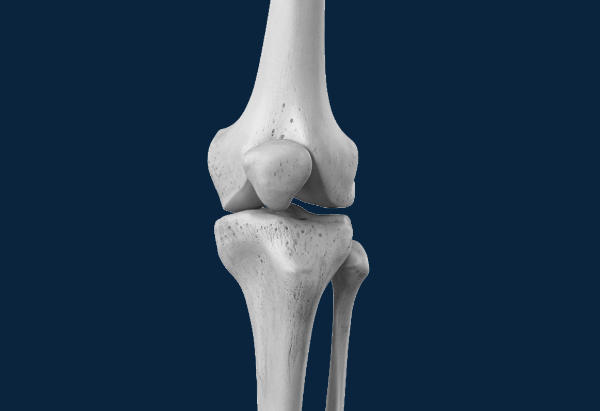
One of the main advantages of this technology is personalization. Every knee is unique: some people have slightly bowed legs, others knock-knees, and it is essential that the prosthesis respects this individual anatomy. Before the operation, preoperative imaging (X-rays with specific sensors or a CT scan) allows for the creation of a detailed plan. The surgeon simulates the prosthesis placement on a computer, checking the size of the implant, its position, and the stability of the knee. In the operating room, sensors attached to the patient's limb allow the system to collect real-time measurements—hip center, ankle center, ligament tension—and cross-reference this data with the initial plan. The result: a prosthesis positioned with millimeter precision, truly tailored like a bespoke suit.
For the patient, the procedure remains similar to that of conventional surgery. The surgeon creates the incision, explores the joint, and places the sensors. They then take precise measurements that the system uses to guide the surgical process. The bone cuts do not involve removing large segments of bone, but rather resurfacing the knee, meaning removing only what is strictly necessary to accommodate the prosthesis. After the procedure, rehabilitation follows its usual course. The data collected during the operation allows for precise monitoring, and some connected apps now help track progress—number of steps, range of motion—to optimize recovery.
Scientific studies confirm several measurable advantages. Robotic surgery offers greater precision in implant alignment, whether for total or partial knee replacement. This precision contributes to better load distribution and optimal prosthesis lifespan. Functional recovery also tends to be improved, and the technology proves particularly valuable in complex cases: obese patients, those with significant deformities, or those with fracture sequelae. The operating time is slightly increased, but remains within quite reasonable limits. As for the additional cost associated with the technology, data suggest that it can ultimately be offset by a reduction in complications and revisions.
Robotic knee surgery is still relatively new—the first robot-assisted partial knee replacement was performed in France in 2013—but it is progressing rapidly. In Switzerland, according to the SIRIS registry, which tracks all joint replacements, the proportion of robotic knee replacements has increased from 3% in 2019 to 14% in 2024, indicating growing adoption. The outlook is promising: systems now collect data before, during, and after the procedure, which, combined with artificial intelligence, could eventually allow for the development of the most suitable surgical strategy for each patient.
If you are considering knee replacement surgery, don't hesitate to discuss these advancements with your surgeon. Technology doesn't replace medical expertise; it provides additional tools to make your care safer, more precise, and even more tailored to your individual situation.
Video type
Lunch meeting
Speakers
Dr. Vincent Villa
Body part
Knee
Diseases
Year
2026
Event Theme
Surgery:
Pathology:
Tendinitis; Chronic pain; Equipment-related problems
Thematic:
Injury prevention

1006 Lausanne
+41215103348
Learn more in videos
Playlist
0:16
Learn more in videos
Playlist
0:16
You might also like


This video explains the role of a robot in the operating room during knee surgery. The robot does not replace the surgeon; it assists…


 Français
  English (UK)