
 English






- Welcome
- 3D Navigation: A Useful Interlocutor
3D Navigation: A Useful Interlocutor
- Dr Jacques Vallotton
- Knee osteoarthritis

Dr. Adrien D'Ambrosio – Lunch Meeting February 2026
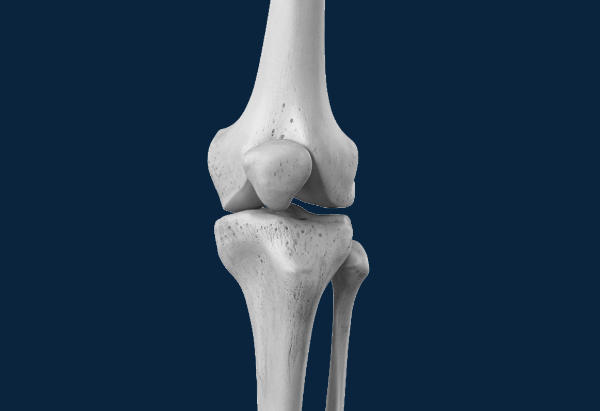
When performing knee replacement surgery, every millimeter counts. The implant must be perfectly aligned with the natural axis of the leg to ensure proper balance, reduced wear, and, above all, a comfortable knee for everyday use. For a long time, surgeons relied on mechanical instruments to achieve this precision. These tools, proven over decades, deliver good results. But technology now offers an additional ally: 3D navigation.
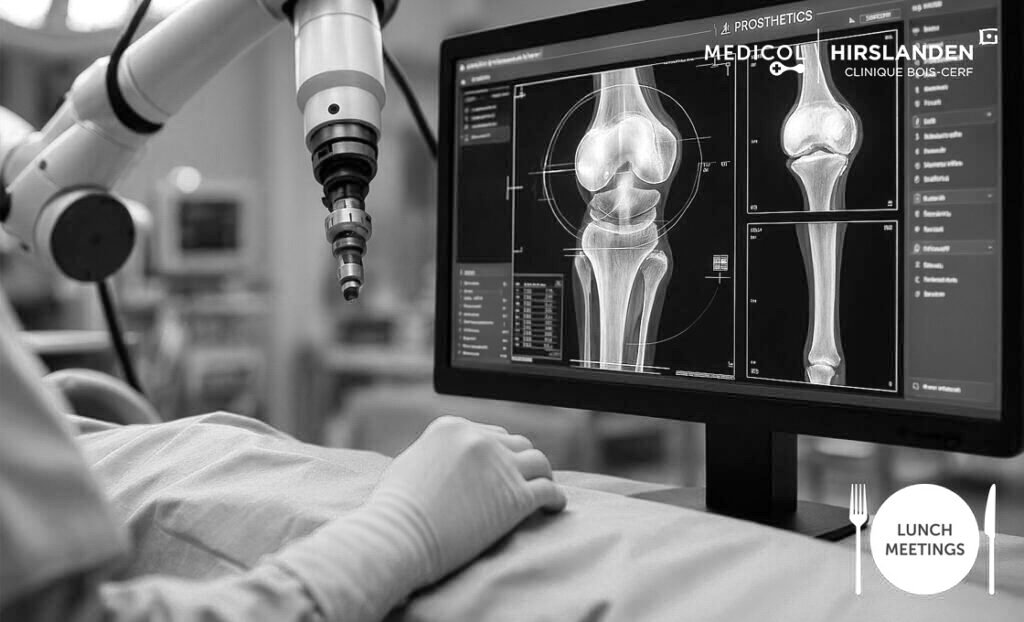
The principle is similar to that of a GPS. Small sensors, temporarily attached to the knee during the procedure, transmit information in real time to a control screen. The surgeon can then visualize with great precision the leg's axis, ligament tension, and the exact orientation of each bone cut. Rather than relying solely on mechanical landmarks, they have a detailed map of the knee, updated at every moment of the operation.
Recent studies, conducted on several hundred thousand patients, confirm the benefits of this approach. We now know that navigation allows for better positioning of the implants and significantly reduces the risk of revision surgery—that is, the need for further surgery. The data also show fewer complications in the weeks following the procedure and a decrease in hospital readmissions. For the patient, this translates into a smoother recovery and a knee that functions better, for longer.
A crucial point: navigation does not replace the surgeon. It is a decision-support tool that enhances their expertise. The surgical procedure, clinical judgment, and knowledge of each patient's anatomy remain in their hands. The technology simply provides them with additional information to tailor their strategy to best meet individual needs.
Because every knee is different. Recent research shows that the ideal alignment is not the same for everyone: some people naturally have slightly bowed legs, others have knock-knees. 3D navigation allows us to respect this unique morphology of each individual, down to the degree.
If you are considering knee replacement surgery, don't hesitate to discuss these advancements with your surgeon. The tools have evolved, and they are designed to make your treatment safer, more precise, and even better tailored to your individual situation.
Video type
Lunch meeting
Speakers
Dr. Adrien D'Ambrosio
Body part
Knee
Diseases
Year
2026
Event Theme
Surgery:
Pathology:
Tendinitis; Chronic pain; Equipment-related problems
Thematic:
Injury prevention

1006 Lausanne
+41215103348
Learn more in videos
Playlist
0:16
Learn more in videos
Playlist
0:16
You might also like


This video explains the role of a robot in the operating room during knee surgery. The robot does not replace the surgeon; it assists…


 Français
  English (UK)