
 English






- Welcome
- Sciatica
Sciatica
Introduction
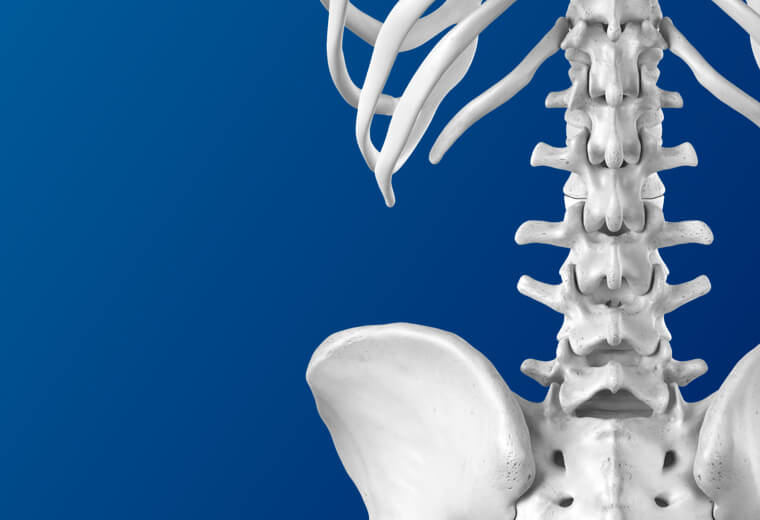
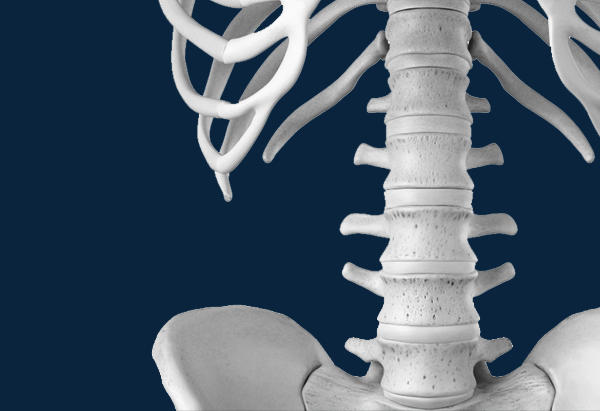
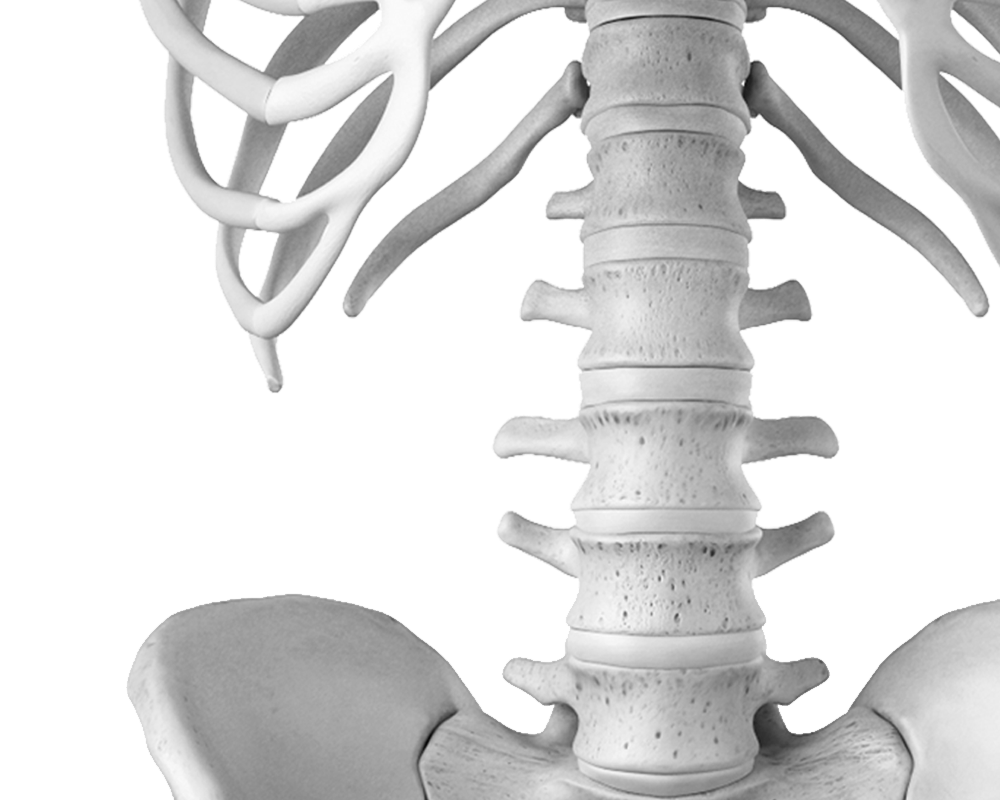
The lumbar spine is the lower part of our back and comprises 5 vertebrae (lumbar vertebrae). These vertebrae consist of a vertebral body at the front and a vertebral arch at the back, which surrounds the spinal canal and nerve structures. Lateral openings (intervertebral foramina) (8) allow nerves to exit the spinal canal to innervate our legs.
The discs are located between the vertebral bodies and act as shock absorbers between the vertebrae. They are formed of a fibrous, elastic, and very strong ring, at the center of which is a ball of gelatinous material (nucleus pulposus). It is thanks to the elasticity of the ring that the nucleus can deform according to the stresses to which it is subjected (body movements, axial or vertical load, resistance against force). The disc and the two vertebrae above and below it form a functional unit called the vertebral segment.
The vertebrae move against each other at the level of the disc anteriorly and at two joints (facet joints) (9) posteriorly. Small movements, on the order of 3 to 5° per segment, are possible in all directions (flexion-extension, lateral flexion on both sides, rotation to the right and left). Considering the entire lumbar spine, the movements are therefore on the order of 15 to 20° in each direction, depending on the patient's age and flexibility. Most of the mobility that we believe occurs in our back actually takes place in our hips.
Signs & symptoms
Sciatica is pain in the leg, typically located along a posterior path reaching the calf, or even the ankle or foot.
Most often it originates in the lower back or buttock. It may be accompanied by sensory disturbances, generally a decrease in sensation, or even a tingling sensation.
In severe cases, muscle weakness may also be observed in the same lower limb (neurological deficit).
The pain is usually more intense when sitting or standing, sometimes aggravated by changes in position, but reduced when lying down with legs slightly bent (resting position).
What is this?
Sciatica is usually caused by irritation of the nerve as it exits the lumbar spine (nerve roots).
Irritation is caused by compression of the nerve structure on a fragment of the disc (herniated disc), narrowing of the canal providing passage to the nerve root (spinal stenosis), degenerative disorders with hypertrophy of the lumbar joints or even the formation of a cyst, or by pathologically excessive mobility at the level of the lumbar vertebrae (acquired or degenerative spondylolisthesis).
Risk factors
Lifting heavy weights without properly positioning the back and lumbar spine.
Some violent rotational movements, flexion-extension of the back.
Certain excessive sporting activities performed without adequate preparation can endanger the disc structure and cause a disc injury or even a herniated disc, or worsen or decompensate an already present lumbar osteoarthritis.
Screening & Diagnosis
The medical examination will include a review of the patient's history (discussion regarding the nature of the pain, its onset, location, what improves it, and what worsens it) as well as an examination of the patient, focusing primarily on their back and legs. A neurological examination is essential when a patient complains of sciatica.
Patient evaluation may require radiological examinations such as standard X-rays, a CT scan, or an MRI scan (nowadays, the best examination for properly identifying lumbar nerve structures and a possible cause leading to irritation of the nerve structure).
Treatments
Self-treatment
In the absence of neurological deficits (loss of sensation, muscle weakness, urinary incontinence), the patient can begin treatment:
- Reduced physical activity, rest
- Lying down, with a cushion under your knees
- Over-the-counter pain relievers and anti-inflammatory medications
Medical treatments
In the majority of cases (90%), sciatica will decrease in intensity or even disappear spontaneously within 6 to 12 weeks, and initial treatment will focus on reducing symptoms to maintain or restore the patient's activity. Only 10 to 20 (%) of patients with sciatica (large herniated disc, severe spinal stenosis, advanced lumbar osteoarthritis, spinal instability, or spondylolisthesis) will require surgical treatment.
- Conservative treatment
(Modification of physical activity, medication, pain relievers and anti-inflammatories, physiotherapy)? In the vast majority of cases of sciatica (not accompanied by neurological deficits such as loss of sensation or muscle weakness), treatment will usually begin with non-surgical approaches. The patient's physical activity should be modified according to their symptoms, and pain should be relieved with rest and pain relievers, anti-inflammatories, and possibly low doses of cortisone. Physiotherapy will also be necessary in most cases. - Epidural or facet joint infiltrations?
A series of epidural or facet joint injections (depending on the diagnosis) may be indicated to maximize treatment. In most cases, this treatment will lead to a gradual reduction, or even disappearance, of symptoms in the following weeks. - Surgical decompression of nerve structures
In cases of severe sciatica caused by nerve compression, resistant to non-surgical treatment, nerve decompression has demonstrated some efficacy, but does not guarantee complete resolution of symptoms. Surgical treatment is described as more effective in treating sciatica when it occurs in isolation compared to cases where sciatica is associated with back pain.
Our favorite methods
Non-surgical conservative treatment
As mentioned above, in the absence of neurological deficit (loss of sensation, muscle weakness) we will always start with optimal non-surgical management (rest, medication, specialized physiotherapy).
Epidural or epidural infiltrations
To enhance the anti-inflammatory effect on irritated or compressed nerve structures, an epidural injection may be considered. This procedure is performed under local anesthesia. Under radiological guidance, a needle is inserted until it reaches the nerves (into the epidural space) at their exit from the lumbar spinal canal, where small amounts of cortisone are deposited to maximize their anti-inflammatory effect. If symptoms improve, the injection can be repeated at intervals determined by the physician (3 to 6 weeks).
Facet joint injections
In rare cases where nerve irritation is caused by advanced lumbar osteoarthritis with the formation of joint cysts, such an injection may be offered to the patient. This procedure is also performed under local anesthesia. Under radiological guidance, the needle is inserted into the affected lumbar facet joint, where a few drops of cortisone are deposited.
Surgical treatment
Decompression of nerve structures
If the cause of sciatica is identified as a disc lesion or even a herniated disc, a microdiscectomy will be performed (see herniated disc). When the underlying pathology is degenerative, such as severe lumbar osteoarthritis with narrowing of the spinal canal or the nerve root exit window, or even the formation of an articular cyst, decompression of the nerve structures will be recommended (see also "spinal stenosis").
This surgical procedure is performed under general anesthesia through a small incision in your lower back. The incision's location is determined radiologically before the procedure begins. The muscles covering the spine are then separated to allow access to the back of the spine. Under the guidance of an operating microscope, the surgeon will then be able to open the spinal canal, which carries the nerves.
The tissues narrowing the spinal tunnel can then be progressively removed using microsurgical instruments. The patency of the tunnel, allowing passage of the nerves, can be assessed using calibration instruments. The extent of this decompression procedure will, of course, depend on the radiological examinations performed before surgery, which will have allowed for precise planning.
Flexible intervertebral fixation
In some cases, after decompression of the nerves is complete, the surgeon will implant devices to slightly separate the two vertebrae and thus prevent nerve compression from recurring. These separators are generally made of very rigid, non-metallic synthetic materials, allowing for easy postoperative X-rays and MRIs. These devices are placed between the spinous processes of each vertebra and held in place by anchoring straps. The separation between the vertebrae is very slight, on the order of 2 mm, as the implant's primary function is to prevent the two vertebrae from coming together.
Spinal fusion
In rare cases where instability of the vertebral segment has been identified during preoperative radiological examinations, nerve decompression will require the addition of fusion of the two affected vertebrae (vertebral fusion or spondylodesis). During these procedures, the two vertebrae are fitted with screws that are inserted using a computer-assisted navigation system, allowing us to position these implants as precisely as possible.
These screws will then be connected to two rods to create perfect stability between the two vertebrae and allow the bone graft placed next to the rods to properly fuse (spinal fusion). These implants are made of titanium, a metal that will allow for future MRI scans if necessary. A small suction drain will be placed at the surgical site before the wound is closed.
After the operation
Upon leaving the operating room (you will be awake), you will spend a few hours in the recovery room. You will be under the care of your anesthesiologist, who will manage your pain. Every effort will be made to ensure your comfort and keep your pain under control. You will lie on your back, and if you wish, the nursing staff can turn you onto your side. As soon as you are sufficiently awake, the anesthesiologist will authorize your transfer from the recovery room to your room. (see recovery)
Surgery
Preparation for surgery
We will be in constant communication with your family doctor to discuss and proceed with the best treatment option for you. Once the surgical indication has been determined and scheduled, you will receive a summons letter from the Bois-Cerf Clinic containing information regarding:
Pre-hospitalization consultation
Before your hospital stay, you will have a consultation with one of our anesthesiologists to assess your health, perform the necessary tests (blood work, chest X-ray, electrocardiogram), and discuss the anesthesia procedure, which will be general anesthesia. Please be informed of the day and time you should arrive at the reception desk of the Bois-Cerf Clinic (this could be the day before or the day of the procedure).
Hospital stay
What you need to bring with you:
- Your personal belongings
- Reading material if you enjoy reading
- Music player
- Your personal medications (if you are receiving treatment at home)
- Your optimism and energy... we'll take care of the rest.
Upon your arrival at the clinic, after completing the administrative formalities, you will be greeted by the receptionists and shown to your room. The nursing staff will take care of you to ensure you are comfortable. Some tests may still be necessary as requested by your doctors. Skin care (disinfection) will be performed on the area of the future surgical wound.
You will receive visits from your surgeon and the anesthesiologist (pre-operative visits). A physiotherapist will visit to instruct you on breathing exercises and how to move in bed and get up after the procedure. The surgery will generally be performed at the time previously communicated to you by your surgeon.
As in the past, the operation is performed under general anesthesia. Your anesthesiologist will administer premedication one hour before the operation and, if necessary, the evening before, to help you relax and reduce stress related to the procedure. Visitors are generally allowed in the recovery room (approximately one hour after you leave the operating room, one person only) and freely in your hospital room.
Recovery
The patient will be mobilized and allowed to get up and move around starting on the day of the operation or the following day, under the supervision of their physiotherapist or nursing staff. A shower is permitted on the second postoperative day, as soon as the patient is without drains or IVs. The suction drain is removed 24-48 hours after the operation. During hospitalization, physiotherapists will teach the patient rehabilitation exercises and how to perform daily activities correctly. Wearing an elastic lumbar support brace is recommended for 3 to 6 weeks, depending on the procedure performed.
Hospitalization is usually 2 to 5 days, depending on the patient's progress and situation at home. For patients requiring spinal fixation, it may be 6 to 7 days. Pain in the buttock and leg (sciatica) is usually well relieved after the operation. Some discomfort and back pain are always present after the operation and will gradually decrease as the muscles heal. A check-up of the surgical wound may be necessary approximately 10 days after the operation (possibly including suture removal). Once you return home, you should lead a quiet life (you are in convalescence). You will need to pay close attention to the surgical wound (according to the instructions received during your hospitalization).
For the first two to three weeks, you should avoid sitting in low positions (sofa, armchair), strenuous physical activity (household chores), and lifting or carrying heavy objects. A follow-up appointment is scheduled approximately three weeks after the procedure to plan your recovery (medication, physiotherapy, return to activity, sick leave, etc.). A physiotherapy rehabilitation program will begin two to three weeks after the operation, usually after your first medical visit.
Physiotherapy focuses on restoring muscle function and strengthening the abdominal muscles, flexibility exercises (neuromeningeal stretching), and progressive mobilization of the lumbopelvic junction. This program can be performed on land, sometimes with the assistance of a swimming pool. The recovery rate varies from patient to patient, and you will usually need to take 2 to 6 weeks off work. You can drive as soon as you can sit comfortably and without pain, generally 2 to 3 weeks after the procedure.
901% of patients obtain good relief from their sciatic pain with this type of surgery. However, approximately 51% of cases will experience a recurrence of the herniated disc in the same location, as well as approximately 51% of patients who will develop chronic back pain due to progressive disc degeneration (see lumbago).
Possible risks
Anesthesia
Since the procedure is performed under general anesthesia, the patient may be exposed to all the risks associated with this technique, especially if their overall health is not optimal (drug allergies, cardiopulmonary, renal, or metabolic problems, etc.). The rate of these complications is low and will be discussed with the anesthesiologist.
Infection
During any surgical procedure, there is a risk of infection, a fortunately rare complication (nerve damage). Since the surgeon comes into contact with nerve structures passing through the spinal canal, nerve damage is always possible, even with the use of an operating microscope. According to specialized medical literature, this risk is approximately 1 in 3 times the normal rate.
Spinal fixation
In cases requiring spinal fixation, there is a risk that the hardware may come into contact with nerve structures, causing irritation of the nerve roots and consequently postoperative pain (1 to 2 %). This risk is reduced by a computer-assisted navigation system used in the operating room during implant placement.
Failure of bone graft consolidation
In cases requiring spinal instrumentation with bone grafting (spondylodesis), there is a risk of graft resorption and consequently non-union (1 to 5 % according to the specialized literature, figures which depend on the means of fixation used and the number of vertebral segments operated).
Dural tear / fistula
Inside the spinal canal, the nerves are surrounded by a membrane (dura mater). A small tear in this membrane can occur during the procedure and nerve manipulation that the surgeon must perform (1-2%). The tear will be repaired during the operation. In very rare cases, the tear may recur and be accompanied by a leak of spinal fluid (fistula), which may require further surgery.
Frequently Asked Questions
How long does the operation take?
Where is the scar?
What is the length of the incision?
Is the operation possible by numbing only the legs (epidural anesthesia)?
When I leave the operating room, will I be lying on my stomach?
How many days will I stay in the clinic?
Will I be in a lot of pain after the operation?
When can I start driving my car again?
After an epidural injection, when can one resume physical activity?
Should we be concerned about the use of cortisone during epidural infiltration?
Are there risks of recurrence (sciatica recurring)?
Will all my pain disappear after the operation?
If I continue to experience pain after the operation, is there anything that can still be done?
In case of a recurrence of sciatica, is there anything that can still be done?
Summary

1006 Lausanne
+41215103348
Learn more in videos
Medicol Videos
Contact one of our specialists on the subject
Ouchy Orthopedic Center
Specialized medical consultations in orthopedics and traumatology in the heart of Lausanne

 Français
  English (UK)