- Welcome
- Rotator cuff
Rotator cuff
Introduction
Anatomy
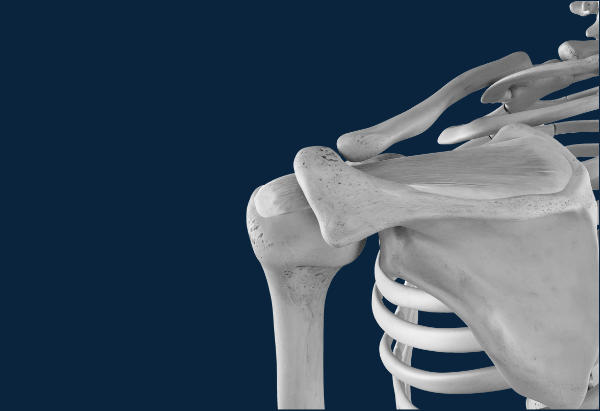
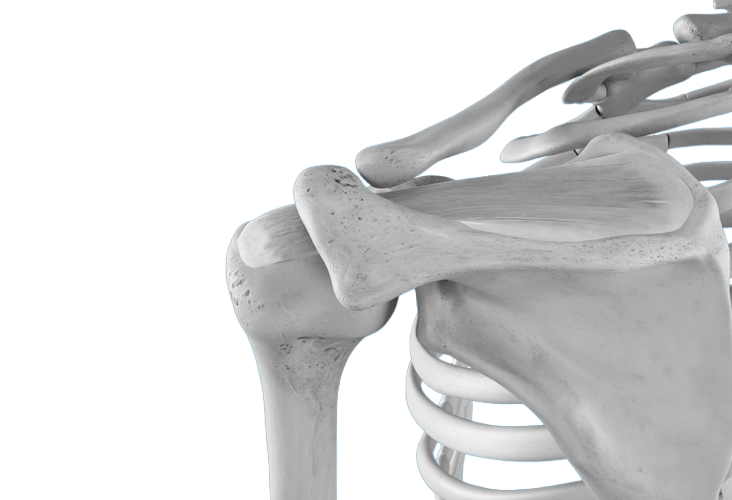
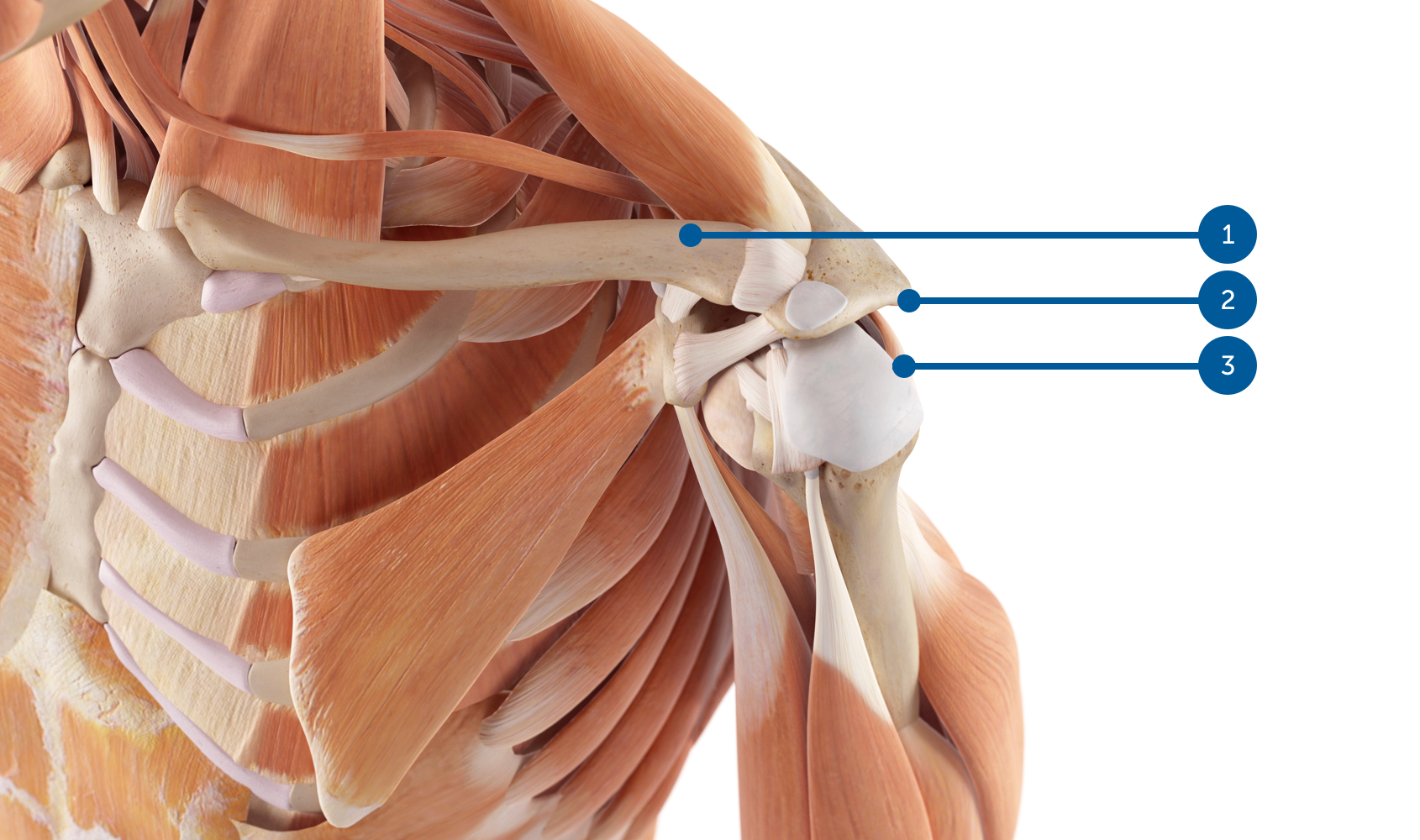
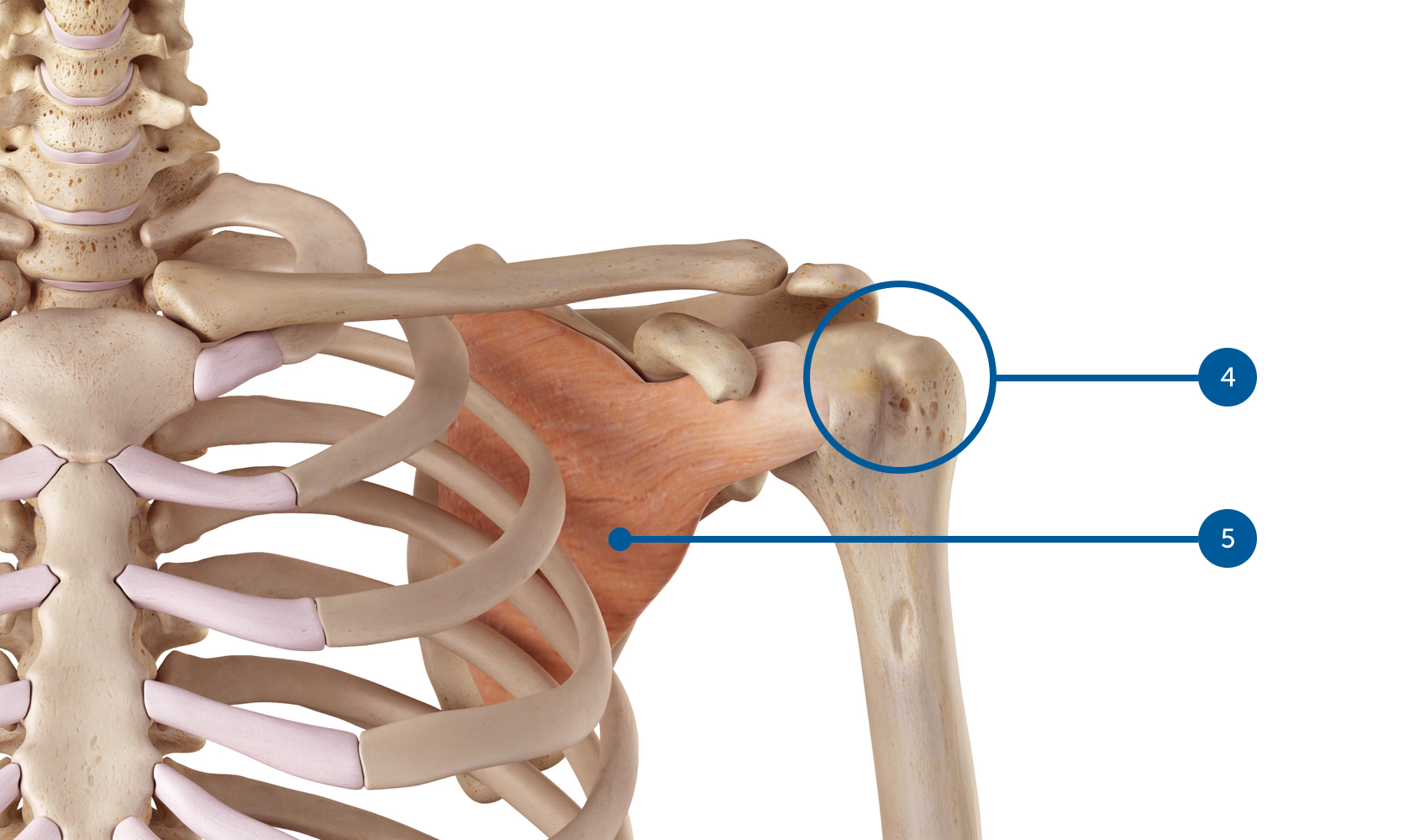
(1) Clavicle, (2) Acromion, (3) Infraspinatus (the infraspinatus), (4) Capsule, (5) Subscapularis (Subscapularis)
The shoulder is remarkable for its range of motion in all directions thanks to the joints that compose it:
The glenohumeral joint is a suspended joint that connects a sphere (the head of the humerus) to a socket (the glenoid cavity of the scapula). The cartilage covering the glenoid cavity is surrounded by a ring of fibrocartilage called the labrum, which effectively helps center the humeral head in the middle of the glenoid cavity. A fibrous joint capsule, similar in shape to a hammock, completes the ligamentous stabilization of this glenoid joint, also known as the "ball-in-the-socket joint.".
To animate the shoulder and at the same time stabilize it by pressing the articular surfaces against each other, there is a set of very effective small muscles grouped under the term "rotator cuff" because of their anatomical arrangement above the head of the humerus.
These rotator muscles of the shoulder are:
- the supraspinatus (Supraspinatus)
- the infraspinatus
- the subscapularis
- the small circle (Teres Minor).
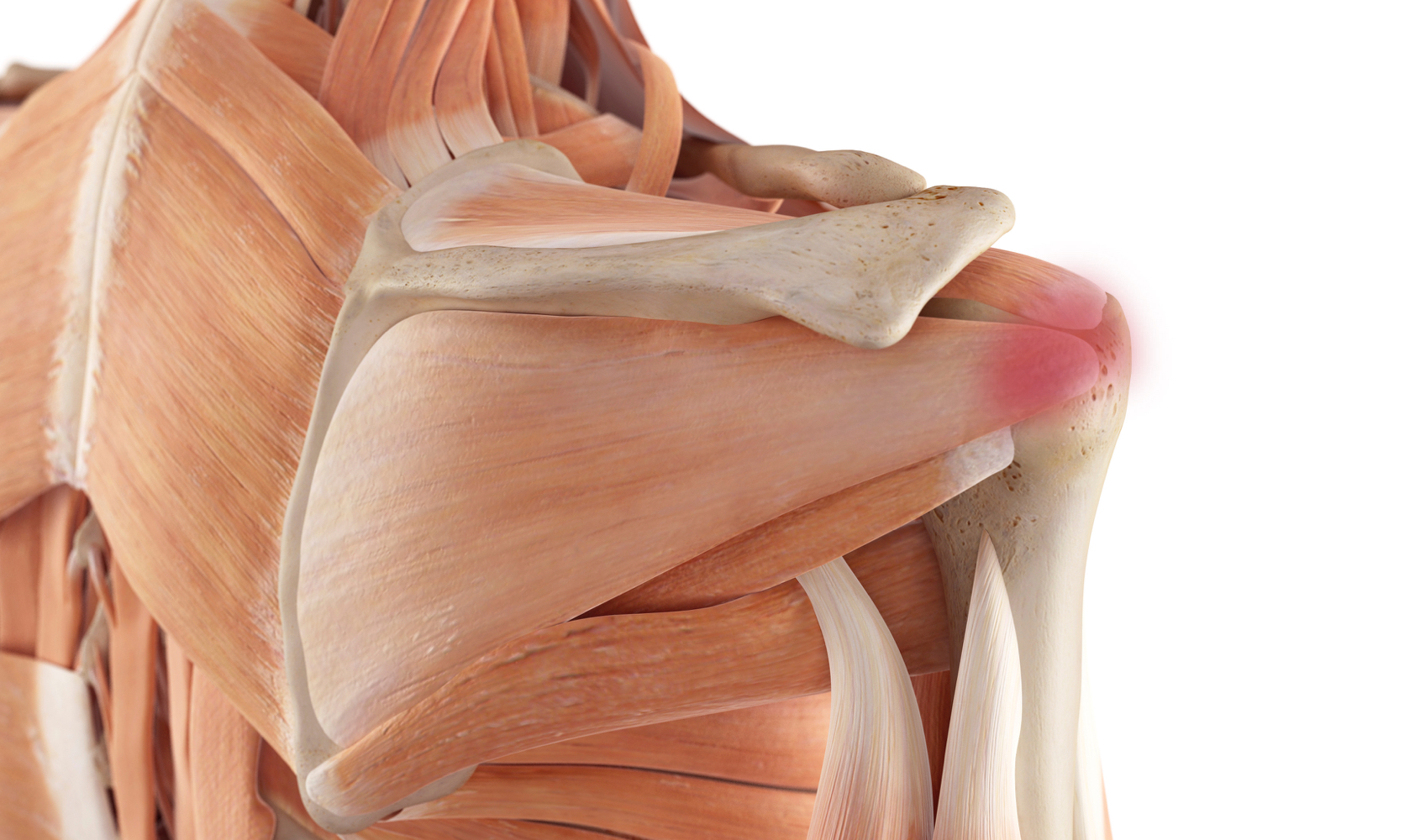
The supraspinatus also plays a key role in raising the arm and allows the head of the humerus to slide under the bony roof of the shoulder called the acromion, which is part of the scapula.
Signs & symptoms
The main symptom of a rotator cuff tear is pain. The pain is present during activities involving overhanging or other lifting techniques and frequently awakens the patient at night. The supraspinatus tendon is by far the most susceptible to injury due to its location at the top of the humerus and is therefore the most common cause of the symptoms. In addition to pain, a tendon tear can lead to muscle weakness during certain movements, particularly when raising the arm. Gradually, due to pain and the inability to perform certain tasks, a limitation of joint range of motion develops.
Shoulder pain can also be related to other problems originating in the heart, digestive system, thoracic spine, or cervical spine. If you experience pain, you should consult a doctor immediately to try to determine its cause.
What is this?
A rotator cuff injury can present in different forms: tendinitis, partial tear, total tear of one or more tendons.
The tendon most frequently affected, alone or with others, is the supraspinatus tendon, which attaches to the upper pole of the insertion ridge of the rotator cuff tendons.
Infraspinatus tendinitis presents as inflammation of the tendon accompanied by an inflammatory reaction in the subacromial bursa. Treatment is usually conservative, involving an exercise program aimed at recentering the humeral head in the glenoid cavity of the scapula and opening the subacromial space. A local corticosteroid injection may be recommended in some cases.
Partial tears of the supraspinatus tendon are often due to what are known as overuse injuries, caused by excessive and repetitive stress on the shoulder during certain movements, resulting in a tendon rupture. Because the injury is only partial, the muscle remains active, and with appropriate rehabilitation exercises, pain can usually be relieved and a return to certain ranges of motion facilitated.
A complete tear of the supraspinatus tendon can result from an accident or develop gradually through repeated micro-tears. Treatment, whether conservative or surgical, depends primarily on the intensity of the pain, the degree of functional impairment, and the condition of the muscle and tendon.
Extensive tears of multiple rotator cuff tendons are frequently accompanied by pseudo-paralysis of the shoulder. Treatment should be tailored to the patient's age, activity level, and pain.
Risk factors
The main risk factors in the event of a rotator cuff tendon tear are:
- Activities that repeatedly strain the shoulder through cantilevered movements.
- An anatomical morphology that predisposes to subacromial conflict (bony beak).
- Acromioclavicular osteoarthritis.
- Sports that pose a risk to the shoulder (contact sports such as ice hockey, judo, snowboarding, etc.).
- Age.
Screening & Diagnosis
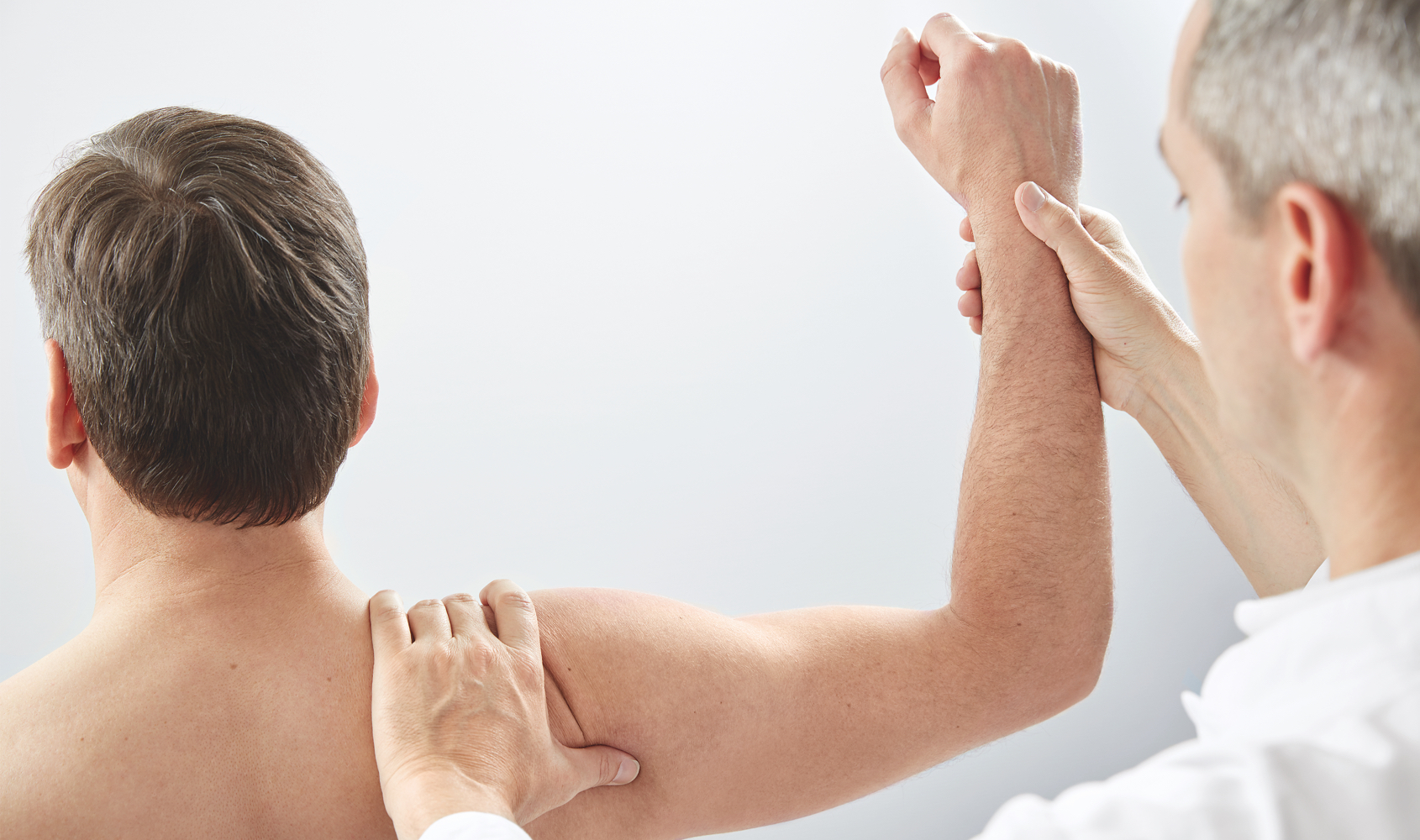
Clinical examination is essential: specific tests allow for the evaluation of the functionality of each of the tendons and muscles of the rotator cuff. Tests can also reveal the presence of subacromial impingement between the head of the humerus and the bony roof of the shoulder (acromion).
Standard X-rays of the shoulder are insufficient to diagnose a rotator cuff tear; magnetic resonance imaging (MRI) or ultrasound is necessary to visualize the lesions. In some cases, arthroscopy is required.
Treatments
Self-treatment
Resting the joint, applying cold compresses, and taking anti-inflammatory medication can relieve pain and help restore shoulder mobility. If the pain persists, it is best to consult a doctor, as a well-conducted physiotherapy program can facilitate recovery.
Medical treatments
Depending on the severity of the injury, its functional impact and the pain, surgical or conservative treatment is offered.
Physiotherapy treatment is essentially based on recentering the head of the humerus in front of the glenoid by loosening the capsular ligaments and strengthening certain muscles.
In the event of a complete tendon rupture, especially one of accidental origin, surgical treatment is recommended in the form of a suture-reinsertion of the tendon onto the head of the humerus. After a precise assessment of the lesions by arthroscopy, the repair is performed either arthroscopically or through a minimally invasive open approach. The tendon is then reattached at its point of origin. In chronic cases, the situation can be more complex because the tendon is sometimes retracted and located some distance from its original attachment point. It is then necessary to release the muscle from the tendon to allow for tension-free reattachment. Finally, in cases of muscle degeneration, this type of treatment is not applicable.
Some acromioclavicular bone spurs may coexist with tendon lesions and even be partially responsible for them; they should be removed at the same time as tendon repair.
Our favorite methods
Surgical treatment begins with shoulder arthroscopy, which allows for a complete assessment of the lesions. During this procedure, a reattachment of the long head of the biceps tendon may be performed, as this injury is sometimes associated with rotator cuff tendon tears.
Arthroscopically, the tendon attachment surface on the humeral head is prepared by preparing the bone. A small incision is then made in the shoulder to insert fixation anchors that will reattach the tendon to its point of origin. Simultaneously, the inferior border of the acromion is sometimes smoothed to eliminate any potential impingement between it and the supraspinatus tendon.
In the postoperative period, rehabilitation is protocolized, including a significant program in the swimming pool.
Surgery
Preparation for surgery
Your family doctor's involvement
We will be in constant communication with your family doctor to discuss and proceed with the best treatment option for you. Once surgery has been indicated, your doctor will arrange the necessary tests to complete the anesthesiologist's pre-operative assessment.
You will receive a summons letter from the Bois-Cerf Clinic with information regarding:
The Pre-Anesthesia Consultation
Before surgery, you will be seen by one of our anesthesiologists who will ask you about your medical history before conducting a clinical examination. You will then be able to discuss the different methods available and choose the most suitable one for your specific case (general anesthesia, epidural anesthesia, spinal anesthesia, regional venous anesthesia, nerve blocks, combined anesthesia).
– What day and time should I arrive at the reception of the Bois Cerf Clinic?
This can be the day before or the day of the procedure.
Surgery
What you need to bring with you:
- Your personal belongings
- Reading material if you enjoy reading
- Music player (which you can bring into the operating room)
- Your optimism and energy... we'll take care of the rest.
Post-operative pain management
PAIN AFTER THE OPERATION IS UNACCEPTABLE FOR US.
The night before your surgery and again in the hour before your anesthesia, you will receive premedication. (You will receive a tablet to help you relax.) The anesthetic strategy will be specifically designed based on your health, your preferences, and the type of surgery, with the aim of ensuring you experience no pain upon waking and during rehabilitation.
Bed rest and ice will be helpful during the first few days. Our team will carefully assess the presence and intensity of your pain with you 24/7 and adjust your treatment accordingly.
Recovery
The first postoperative day:
Treatment focuses primarily on pain relief and restoring free movement to the cervical and thoracic spine. Massage and mobilization of the scapula are also performed, and depending on the pain level, the patient is encouraged to roll their shoulders forward and backward.
The second postoperative day:
Pain relief treatment through massage and cervico-dorsal mobilization. Pendulum mobilization of the elbow and shoulder. Shoulder rolling movement and initiation of scapular stabilization exercises.
Typically, on the third postoperative day, the patient can return home with an exercise program focused on isometric shoulder strengthening (exercises that can be performed without moving the joint), shoulder pendular mobilization, shoulder rolling movements, scapular stabilization exercises, and the start of a pool program.
Possible risks
The infection
Infection is always a serious complication in orthopedic surgery, but fortunately very rare (less than 0.51 TP3T). Specific measures are taken to minimize these risks, including: systematic pre- and immediate post-operative antibiotic therapy, operating rooms equipped with high-flow laminar airflow, a highly trained and experienced orthopedic surgical team, optimal skin preparation, and a careful assessment of your health.
If you experience fever or local redness after your procedure once you have returned home, you must call your surgeon immediately.
Tendon re-tear
During surgical treatment, tendon fixation is normally performed without excessive tension. The sutures are intended to protect the tendon during its healing phase. However, this phase is not complete until 6 to 12 weeks later, and it is therefore essential to adhere very strictly to the prescribed rehabilitation program to prevent suture dehiscence.
Limitation of shoulder mobility
Any surgical procedure causes inflammation, which can lead to a loss of mobility. Until the tendons have fully healed, a certain degree of joint protection is necessary, resulting in capsule retraction. Despite a rehabilitation program aimed at rapidly restoring shoulder mobility, some stiffness will develop, requiring gradual loosening through exercises. The recovery of shoulder function can take more or less time depending on the nature of the repair and the individual patient.
Frequently Asked Questions
What type of anesthesia is offered for this type of surgery?
How long should I wear a scarf or vest?
Is surgical treatment often synonymous with success?
When will I be able to start driving again?
Summary
1006 Lausanne
+41215103348
Learn more in videos
Medicol Videos
1:02:48
1:07:40
4:19
17:03
20:32
9:36
29:09
1:41:27
20:36
11:17
11:27
17:37
15:37
Contact one of our specialists on the subject
Ouchy Orthopedic Center
Specialized medical consultations in orthopedics and traumatology in the heart of Lausanne